
Effective mental health care depends on systems that support collaboration without adding complexity.
MindCare Solutions was developed to support the quiet complexity of mental health care. Designed as a multi-platform tool for team-based coordination and treatment planning, the application creates a shared framework where information is clear, decisions are aligned, and collaboration feels natural rather than forced.
By bringing assessments, communication, and treatment plans into one coherent system, the platform reduces fragmentation across teams and workflows. The result is a UX solution that prioritises clarity and efficiency without losing sensitivity—supporting healthcare professionals in delivering consistent, well-coordinated care.
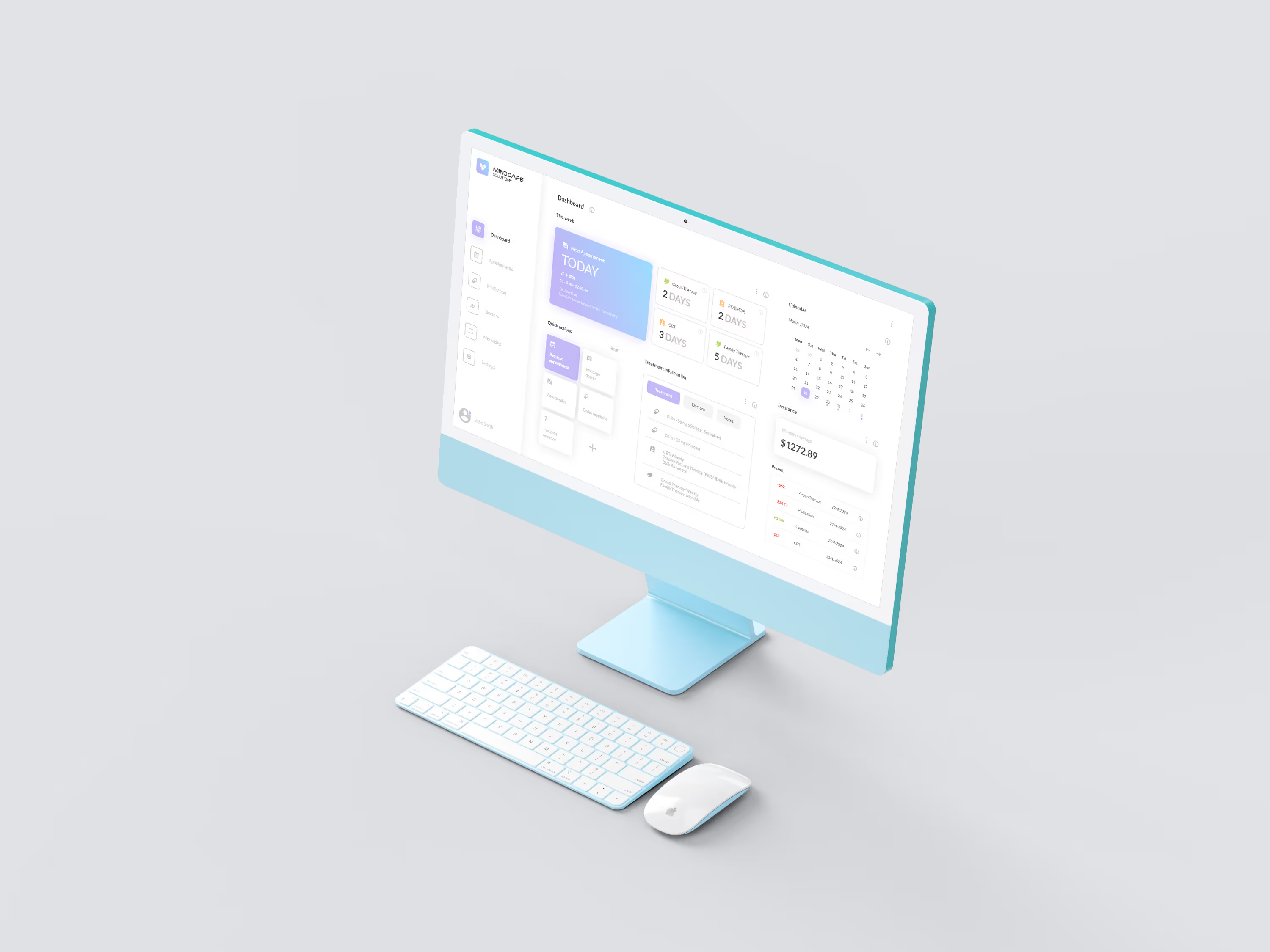
The design of the MindCare Solutions EHR was shaped by structure and restraint. From the outset, the focus lay in understanding the realities of healthcare environments—where time is limited, information is sensitive, and clarity is essential. Early research and task analysis established a clear foundation, ensuring that both clinical and operational needs were fully understood before form was introduced.
Existing solutions were examined not to imitate, but to identify gaps, limitations, and opportunities for improvement. Concepts were explored through sketches and early visualisations, allowing ideas to be tested quickly and without assumption. Low-fidelity prototypes translated these ideas into functional structures, making it possible to assess usability and flow at an early stage.
User testing played a central role throughout the process, offering critical insight into how the system would be used in practice. Feedback informed each iteration, guiding refinements toward a high-fidelity design that balances functionality with ease of use. The result is a considered UX solution—built methodically, tested thoughtfully, and designed to support complex work without unnecessary friction.
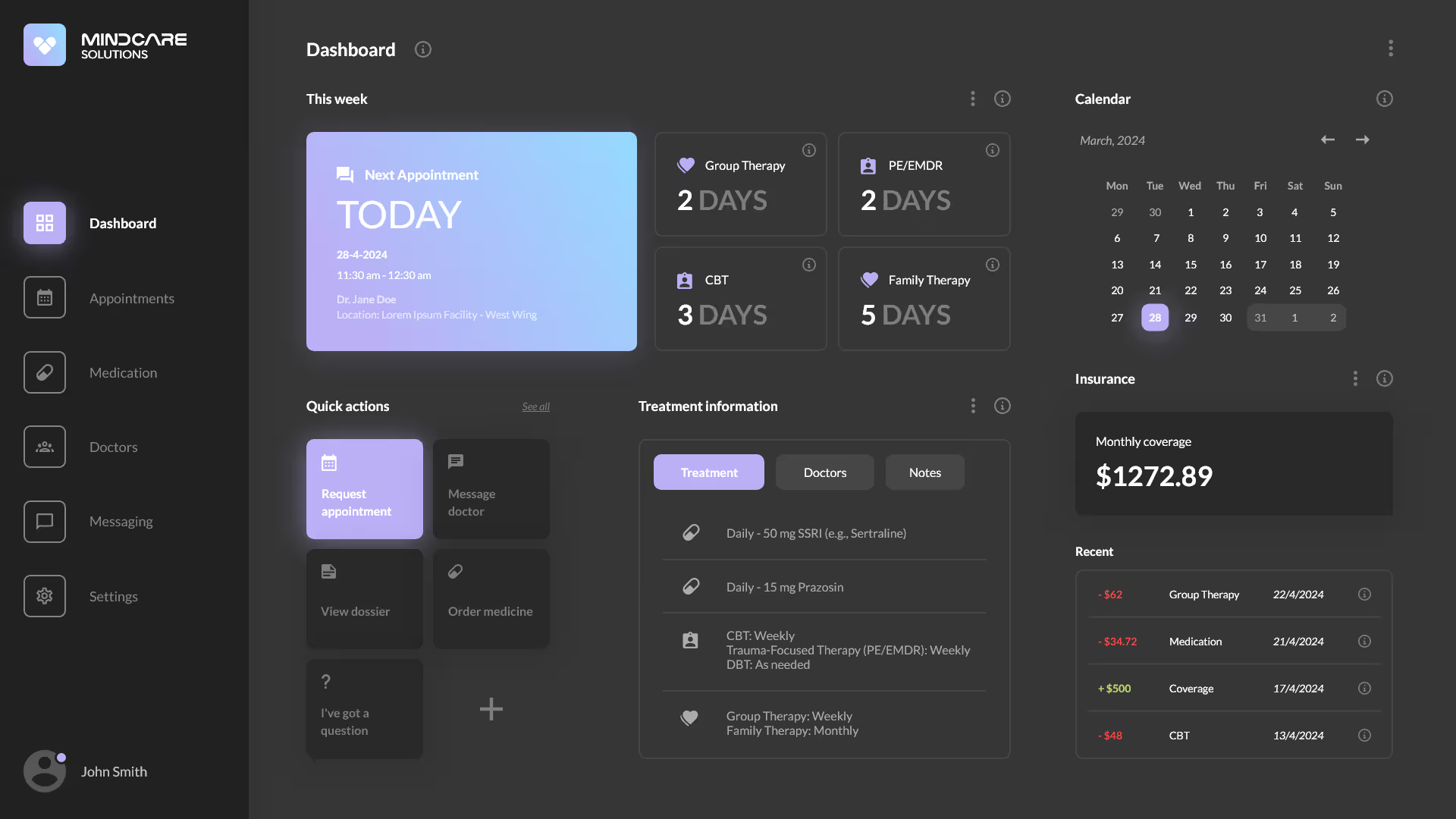
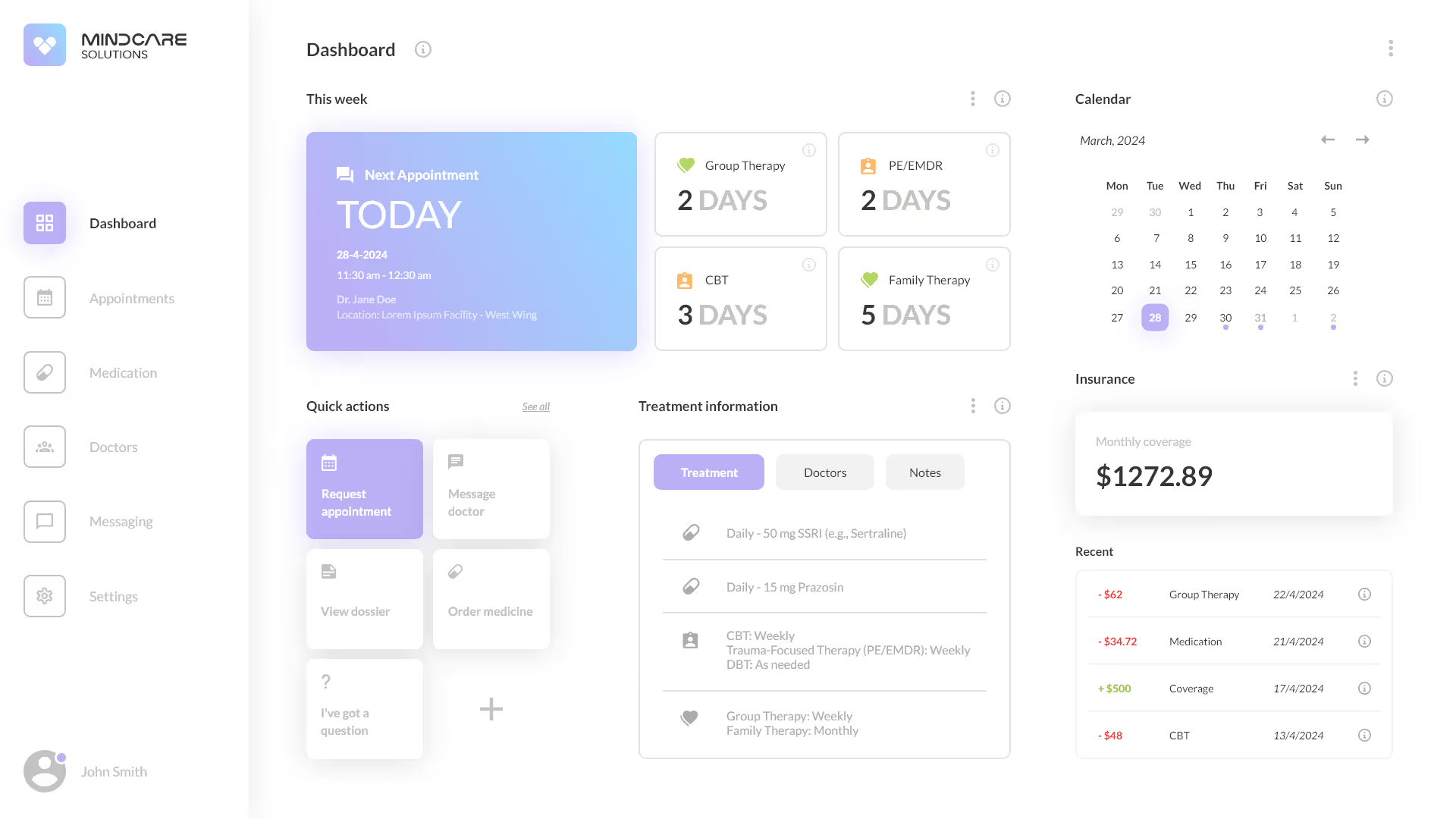
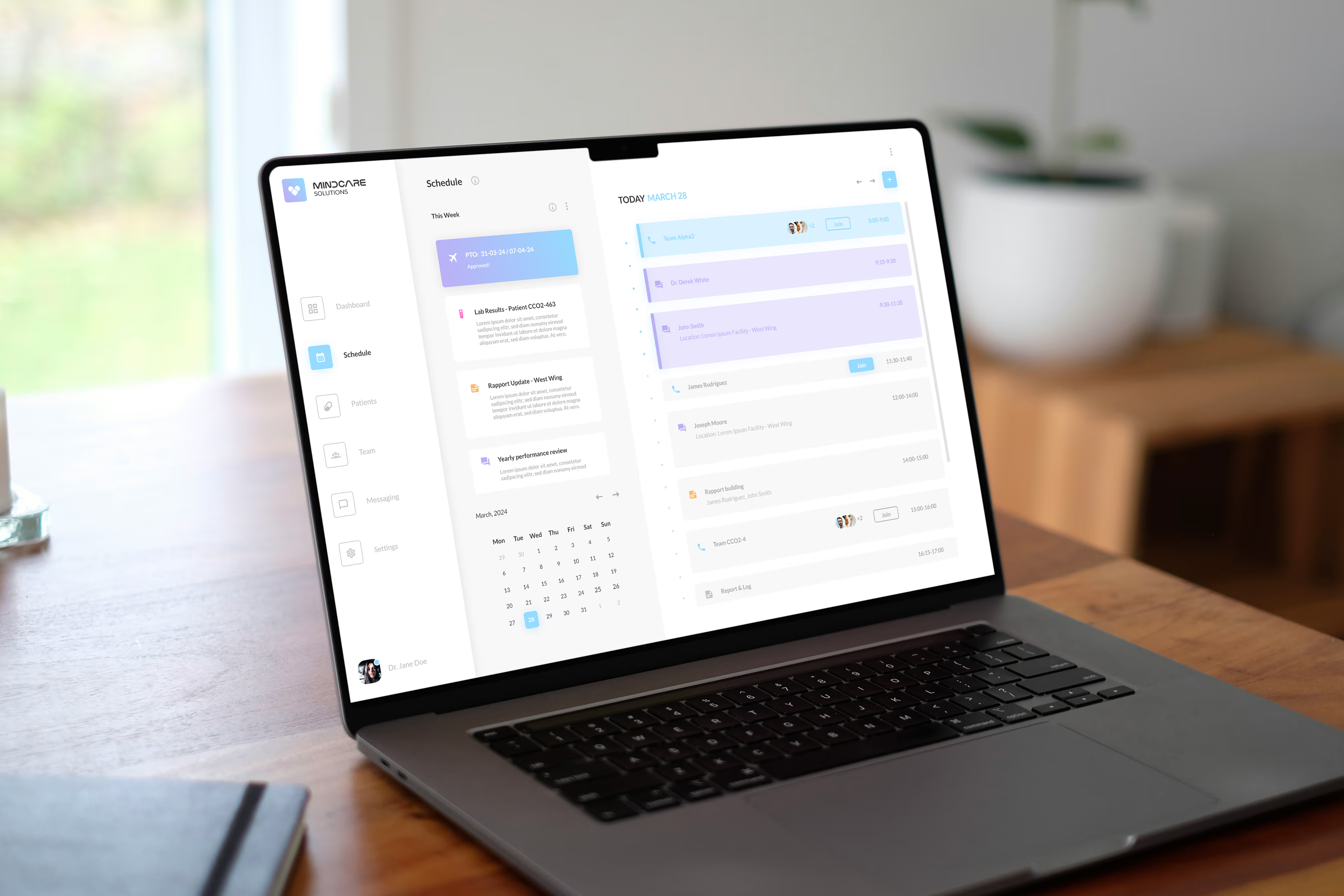
MindCare Solutions was developed to support the quiet complexity of mental health care. Designed as a multi-platform tool for team-based coordination and treatment planning, the application creates a shared framework where information is clear, decisions are aligned, and collaboration feels natural rather than forced.
By bringing assessments, communication, and treatment plans into one coherent system, the platform reduces fragmentation across teams and workflows. The result is a UX solution that prioritises clarity and efficiency without losing sensitivity—supporting healthcare professionals in delivering consistent, well-coordinated care.
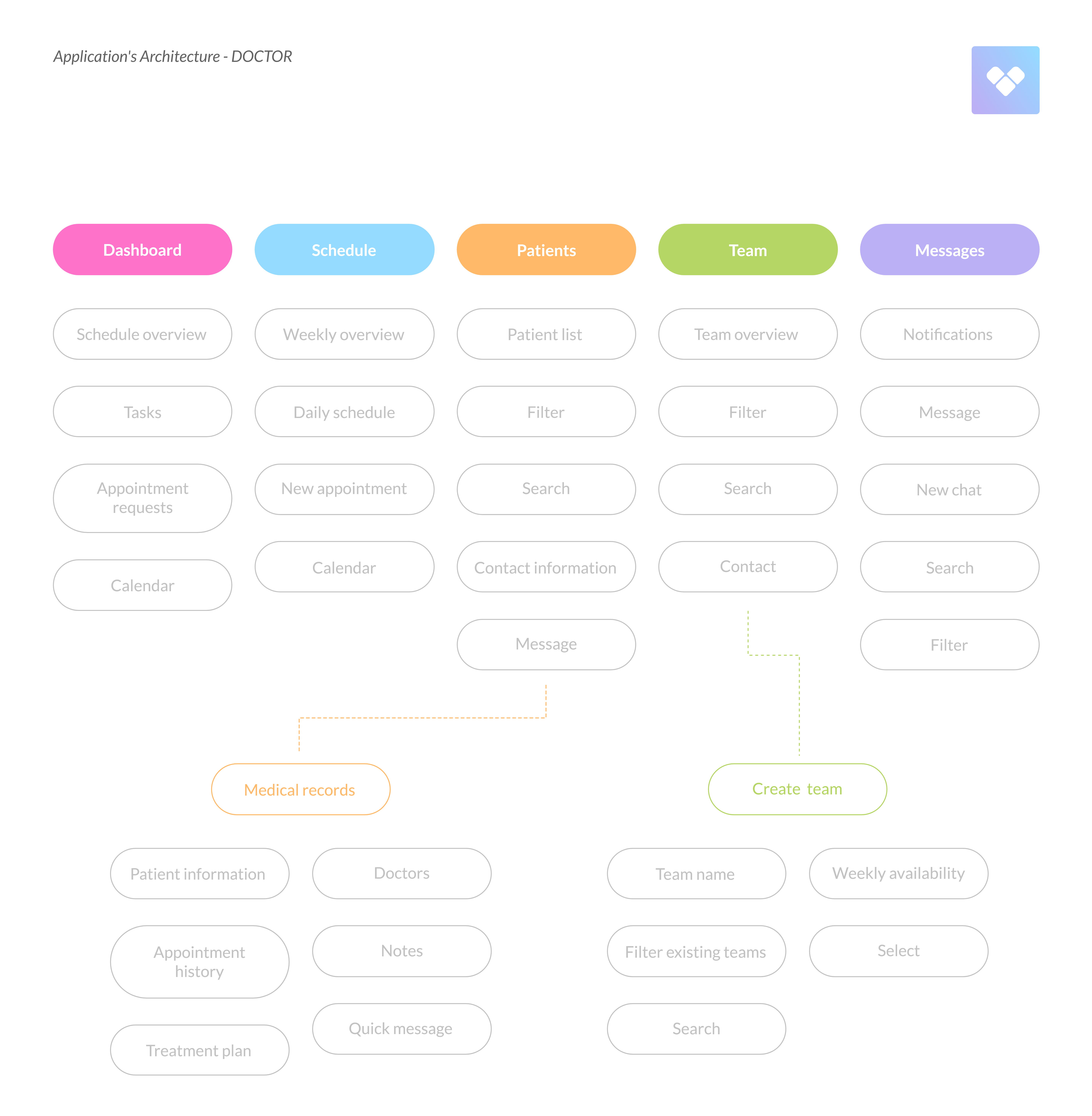
The design of the MindCare Solutions EHR was shaped by structure and restraint. From the outset, the focus lay in understanding the realities of healthcare environments—where time is limited, information is sensitive, and clarity is essential. Early research and task analysis established a clear foundation, ensuring that both clinical and operational needs were fully understood before form was introduced.
Existing solutions were examined not to imitate, but to identify gaps, limitations, and opportunities for improvement. Concepts were explored through sketches and early visualisations, allowing ideas to be tested quickly and without assumption. Low-fidelity prototypes translated these ideas into functional structures, making it possible to assess usability and flow at an early stage.
User testing played a central role throughout the process, offering critical insight into how the system would be used in practice. Feedback informed each iteration, guiding refinements toward a high-fidelity design that balances functionality with ease of use. The result is a considered UX solution—built methodically, tested thoughtfully, and designed to support complex work without unnecessary friction.
.avif)
.avif)
.avif)

